Special Stories from the restoration
Joel Hedgpeth
 “There are several of us who have had a son also volunteering on the City of Savannah project, but I believe I am the only one who has two sons volunteering. My oldest son, Joshua, lives in Longview, Texas, where he graduated from my alma mater with an Associate of Science in Air Traffic Control. When he gets the opportunity, he comes to Savannah to visit us and help on the B17. My youngest son, Ben, also volunteers on the B17. As a high school student, he often has other priorities, but he enjoys helping when he can and has learned much from working with the other volunteers. I offered them this opportunity to work on the B-17 for two reasons: 1) it’s a once-in-a-lifetime opportunity to be part of the restoration of a WWII aircraft, and 2) most importantly - they get to meet some of the men who fought for our country during WWII and their families. There will not be many more opportunities to meet these men, and I wanted them to be a part of this project and to develop an understanding of our country’s past and why we enjoy the freedoms we have. It has been a great experience for me sharing this opportunity with my sons.”
Special Stories from the restoration
Jim Odom
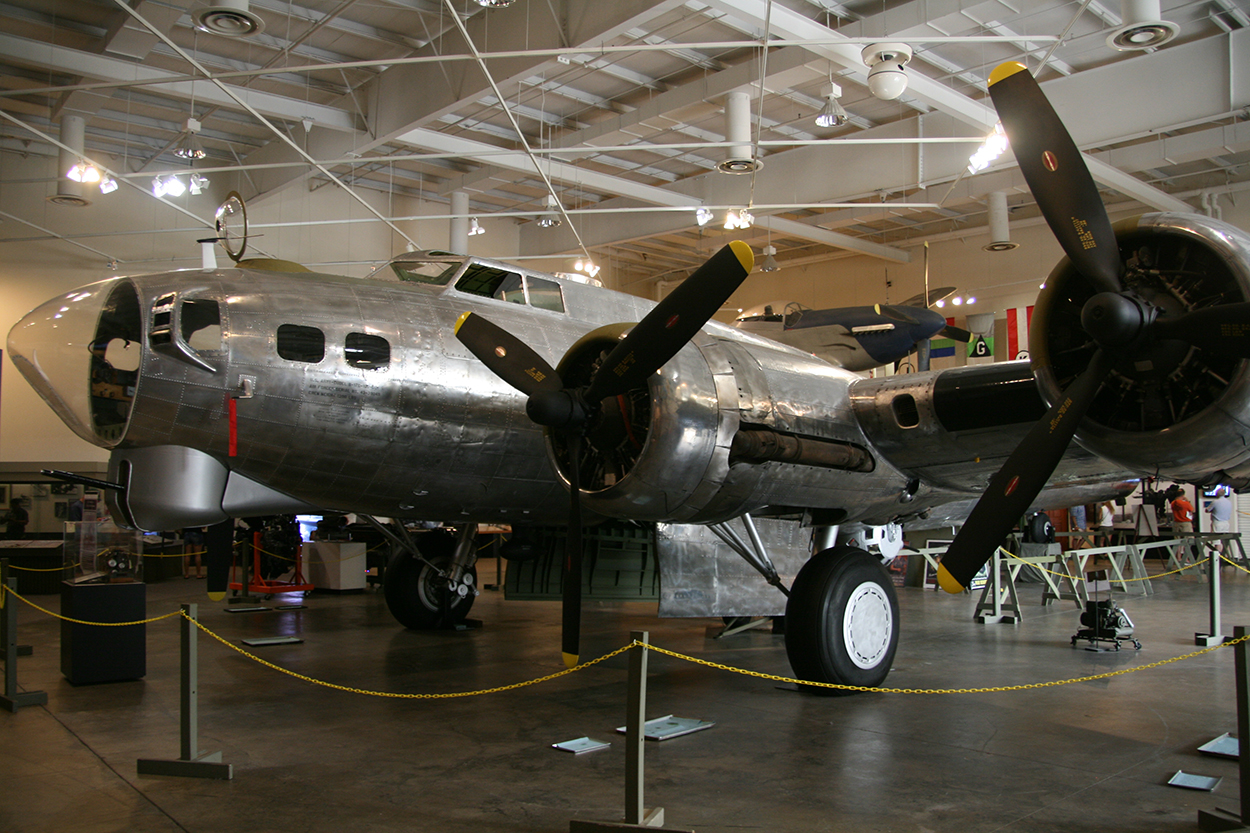 “This is my special story. One Saturday morning I was at the museum working on the tail turret. It was at the time when there were a couple of World War II airplanes visiting Savannah, and one was a B-17. Some WWII veterans were there to get a ride. I was standing beside the tail working, when this small in stature, grey haired man walked up to me and said, ‘That's where I used to sit.’ I said, ‘Oh yeah? You were a tail gunner?’ The older gentleman said ‘Yep, I saw the world backwards.’ I said ‘Well thank you Sir.’ I had to take a couple of steps away to set something down and kept an eye on the guy. He walked over to the tail and placed his hand on it. I watched him mouth the word, ‘Wow’. Then he slowly lowered his head and began to cry. I backed a little further away to give him some space. After a moment he recovered and walked over to me, shook my hand and said ‘Thanks for restoring this old girl.’ I was pretty choked up but managed to say ‘No sir, thank you.’ In that one powerful moment, I realized that all my efforts and all the work I had done up to that point were worth it. I knew then why I was here.” James Collins Odom, Jr. (Jim Odom’s dad was a WWII 8th AF veteran.)
Special Stories from the restoration
Mystery Story:
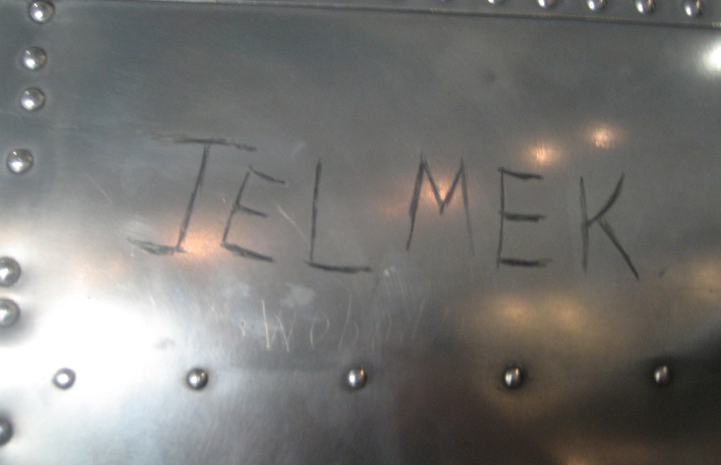 “
It isn’t very often that you get documentation for a story, but
nobody to actually tell the story – this is just such a case.
Sometime during 2013 the museum got a call from a woman in Hazen, North Dakota. She wanted to know if the
B-17 at the Mighty Eighth
was the same B-17 that had been a war memorial in Hazen in
the late 1940s. None of the current
volunteers can remember who took the call, but word was se
nt down to the shop that a woman
had called and that she told the museum staffer that she an
d her boyfriend had carved their
initials on the airplane in front of and slightly below
the airplane
’
s left horizontal stabilizer.
What we do know is that Bud Currey was asked to verify that t
he initials were, in fact, carved
into the metal. Sure enough, there they were,
“
JEL MEK
”
. The local Hazen newspaper was
contacted and asked if they could help to find who it was th
at had made the call and carved their
initials in the airplane so many years ago. No one ca
me forward to explain. The initials are still
th
ere, but the story doesn
’
t have a name attached
......
.yet. ”
“
It isn’t very often that you get documentation for a story, but
nobody to actually tell the story – this is just such a case.
Sometime during 2013 the museum got a call from a woman in Hazen, North Dakota. She wanted to know if the
B-17 at the Mighty Eighth
was the same B-17 that had been a war memorial in Hazen in
the late 1940s. None of the current
volunteers can remember who took the call, but word was se
nt down to the shop that a woman
had called and that she told the museum staffer that she an
d her boyfriend had carved their
initials on the airplane in front of and slightly below
the airplane
’
s left horizontal stabilizer.
What we do know is that Bud Currey was asked to verify that t
he initials were, in fact, carved
into the metal. Sure enough, there they were,
“
JEL MEK
”
. The local Hazen newspaper was
contacted and asked if they could help to find who it was th
at had made the call and carved their
initials in the airplane so many years ago. No one ca
me forward to explain. The initials are still
th
ere, but the story doesn
’
t have a name attached
......
.yet. ”
Special Stories from the restoration
Urban Legend #2
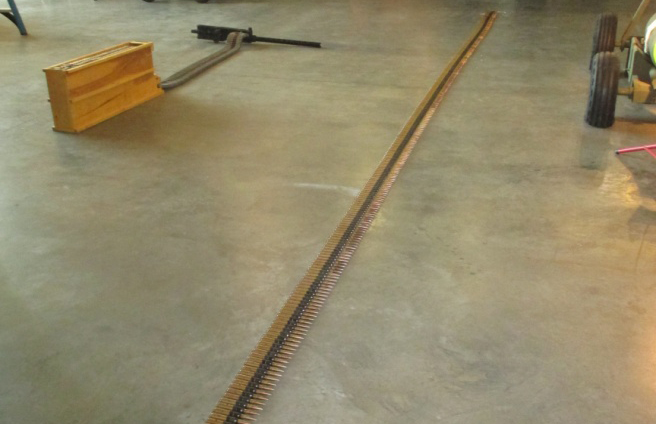 “Urban Legend #2:
Most Americans have heard the expression
“
the whole nine yards
”
,
which loosely defined, depicts an endeavor that was given
a full measure of effort. During 2014
another undocumented visitor tipped us off to the origin of t
hat phrase, and when we called othe
r
B-17 friends we had the story confirmed several times: it
seems that the standard ammunition
box in a B-17 Flying Fortress engaged in combat in the Eig
hth Air Force in 1944-45 held a load
of .50 caliber ammunition that when stretched out in a stra
ight line would be nine yards long
hence, when a gunner expended all of this ready ammunition,
he would have given
“
the whole
nine yards
”
. There may be other versions of the story, but that
’
s the one we like. ”
“Urban Legend #2:
Most Americans have heard the expression
“
the whole nine yards
”
,
which loosely defined, depicts an endeavor that was given
a full measure of effort. During 2014
another undocumented visitor tipped us off to the origin of t
hat phrase, and when we called othe
r
B-17 friends we had the story confirmed several times: it
seems that the standard ammunition
box in a B-17 Flying Fortress engaged in combat in the Eig
hth Air Force in 1944-45 held a load
of .50 caliber ammunition that when stretched out in a stra
ight line would be nine yards long
hence, when a gunner expended all of this ready ammunition,
he would have given
“
the whole
nine yards
”
. There may be other versions of the story, but that
’
s the one we like. ”
Special Stories from the restoration
Ralph Kittle Jr
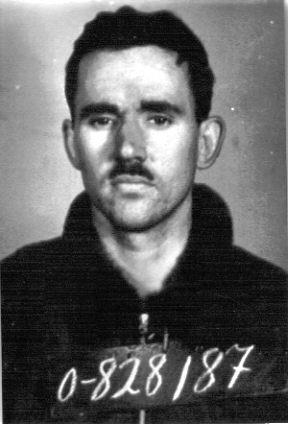 Ralph Kittle Jr.: (Son of the original City of Savannah pilot) My father spoke very little about what had happened to him in WWII. Once, at Christmas in 1975, my family was flying to Austria to see my sister during her junior year abroad. My father was staring out the window of the 747 at a mountain pass in the Alps, completely absorbed. We were wondering what had fixated him. Finally, I sat next to him and asked if something was wrong. He told me, “We would fly just this course during the war, and would ease right above that pass at 25,000 feet, on our way to the bombing run of Munich.” For the next forty minutes he told me a little about what had happened to him on his last bombing mission. The basic facts were laid out in the award of the Distinguished Flying Cross to my father for his last bombing mission:
“Ralph W. Kittle, 0828187, First Lieutenant, Army Air Forces, Untied States Army. For extraordinary achievement while serving as pilot of a B-17 aircraft on a heavy bombardment mission to Plauen, Germany, 5 March 1945. While in-route to the target his aircraft was hit by flak which knocked out one engine, but despite this difficulty he continued on to the target. While on the bomb run another engine failed, but Lieutenant Kittle pressed on until the bombs were released. Just after leaving the formation another engine failed, and seeing that it was impossible for him to reach friendly territory, he ordered the crew to bail out while he skillfully maintained level flight. The flying skill and courageous devotion to duty displayed by Lieutenant Kittle on this occasion reflect the highest credit upon himself and the Army Air Forces.”
What my father told me on that flight was that after the bombs were dropped, he told his crew to lighten up the B-17, and they proceeded to throw the guns, bullets and everything else off the plane. Suddenly, the ball turret gunner ran up to him with his open parachute. I still remember how shocked my father looked just remembering this, thirty years later. Somehow, they found another one on board. He told the crew that they were going towards the Russians to the east, because there was no way they could get back to England. Then the third engine failed. He ordered the crew to prepare to bail out. When they entered a bank of clouds, he gave the order to jump. All of his crew were taken prisoner and survived the war, with the exception of Bob Warren, his tail gunner, who said he would never be taken alive and was an expert marksman. He was killed. Now my father was alone in that plane, looking at the mountains ahead of him. It almost looked like he could make it over the mountains, but as he watched, he realized - not quite. He bailed out of the plane and opened his parachute and as he glided down he watched his plane fly on toward the mountains. He landed softly in a tree and it took him awhile to get down to the ground. He stepped out onto a big flat field covered in snow, his .45 caliber pistol in his hand. He wondered – what is this Georgia boy doing out here? I don’t think that he had realized before that his left leg had been injured by flak, but now he had a hard time walking. He tried to head east toward partisans in Czechoslovakia. Along the way, he ran into three other American flyers from another airplane, also shot down. He told me that they entered a barn. The other flyers were eager to keep going and tried to get my father to go with them. But he was too injured to join them. He remained in the barn and wished them well. Some members of the Volkssturm, the German home guard, were tracking him with dogs. They found him and beat him. Some soldiers of the Wehrmacht saw what was happening and stopped them. One soldier gave him a cigarette, which he never forgot. They rounded him up with other flyers they had picked up and marched them through the town to the train station. There, on the main street, he saw the bodies of the three Americans that he had been with the day before, strung up on lampposts. They also had been captured by the Volkssturm who did not appreciate being bombed. He was transported across Germany to Frankfurt where all pilots were interrogated. The Gestapo questioned him. Something that he remembered so clearly was the trim of their black uniforms, so perfectly made. He was there for a few days. The Germans then put him in a boxcar to a Stalag near Nuremberg. He was there for less than a week. Patton was closing in from the west. The Germans emptied the POW camp and started a long march for the prisoners back across Germany. My father had a difficult time walking and needed a cane to keep going. He was struck by a brick thrown by a civilian and was badly hurt. The column of prisoners was strafed by American fighters. His feet became perfectly flat from the march. He lost thirty pounds. They finally arrived at another German Stalag in Schweinfurt. By this time, the Germans had little to feed their prisoners, just soup once a day. He talked about a pilot who had been imprisoned there for years and helped him keep going. After a few weeks, the prisoners got up one morning and all the guards were gone. One of Patton’s tanks rolled right over the barbed wire and they suddenly realized they were free. The war in Germany ended a few weeks later. (During an interview with Dick Gorman at the NMMEAF at the B-17 dedication, Ralph, Jr., and his cousin Pat McMillen also revealed that Ralph, Sr. was awarded two Purple Heart medals upon his return from being a POW. The first was for a shrapnel wound he received from the original flak hit on the airplane, and the second for a head wound that he received after being hit by a brick thrown by a German civilian during the POW march.)
Ralph Kittle Jr.: (Son of the original City of Savannah pilot) My father spoke very little about what had happened to him in WWII. Once, at Christmas in 1975, my family was flying to Austria to see my sister during her junior year abroad. My father was staring out the window of the 747 at a mountain pass in the Alps, completely absorbed. We were wondering what had fixated him. Finally, I sat next to him and asked if something was wrong. He told me, “We would fly just this course during the war, and would ease right above that pass at 25,000 feet, on our way to the bombing run of Munich.” For the next forty minutes he told me a little about what had happened to him on his last bombing mission. The basic facts were laid out in the award of the Distinguished Flying Cross to my father for his last bombing mission:
“Ralph W. Kittle, 0828187, First Lieutenant, Army Air Forces, Untied States Army. For extraordinary achievement while serving as pilot of a B-17 aircraft on a heavy bombardment mission to Plauen, Germany, 5 March 1945. While in-route to the target his aircraft was hit by flak which knocked out one engine, but despite this difficulty he continued on to the target. While on the bomb run another engine failed, but Lieutenant Kittle pressed on until the bombs were released. Just after leaving the formation another engine failed, and seeing that it was impossible for him to reach friendly territory, he ordered the crew to bail out while he skillfully maintained level flight. The flying skill and courageous devotion to duty displayed by Lieutenant Kittle on this occasion reflect the highest credit upon himself and the Army Air Forces.”
What my father told me on that flight was that after the bombs were dropped, he told his crew to lighten up the B-17, and they proceeded to throw the guns, bullets and everything else off the plane. Suddenly, the ball turret gunner ran up to him with his open parachute. I still remember how shocked my father looked just remembering this, thirty years later. Somehow, they found another one on board. He told the crew that they were going towards the Russians to the east, because there was no way they could get back to England. Then the third engine failed. He ordered the crew to prepare to bail out. When they entered a bank of clouds, he gave the order to jump. All of his crew were taken prisoner and survived the war, with the exception of Bob Warren, his tail gunner, who said he would never be taken alive and was an expert marksman. He was killed. Now my father was alone in that plane, looking at the mountains ahead of him. It almost looked like he could make it over the mountains, but as he watched, he realized - not quite. He bailed out of the plane and opened his parachute and as he glided down he watched his plane fly on toward the mountains. He landed softly in a tree and it took him awhile to get down to the ground. He stepped out onto a big flat field covered in snow, his .45 caliber pistol in his hand. He wondered – what is this Georgia boy doing out here? I don’t think that he had realized before that his left leg had been injured by flak, but now he had a hard time walking. He tried to head east toward partisans in Czechoslovakia. Along the way, he ran into three other American flyers from another airplane, also shot down. He told me that they entered a barn. The other flyers were eager to keep going and tried to get my father to go with them. But he was too injured to join them. He remained in the barn and wished them well. Some members of the Volkssturm, the German home guard, were tracking him with dogs. They found him and beat him. Some soldiers of the Wehrmacht saw what was happening and stopped them. One soldier gave him a cigarette, which he never forgot. They rounded him up with other flyers they had picked up and marched them through the town to the train station. There, on the main street, he saw the bodies of the three Americans that he had been with the day before, strung up on lampposts. They also had been captured by the Volkssturm who did not appreciate being bombed. He was transported across Germany to Frankfurt where all pilots were interrogated. The Gestapo questioned him. Something that he remembered so clearly was the trim of their black uniforms, so perfectly made. He was there for a few days. The Germans then put him in a boxcar to a Stalag near Nuremberg. He was there for less than a week. Patton was closing in from the west. The Germans emptied the POW camp and started a long march for the prisoners back across Germany. My father had a difficult time walking and needed a cane to keep going. He was struck by a brick thrown by a civilian and was badly hurt. The column of prisoners was strafed by American fighters. His feet became perfectly flat from the march. He lost thirty pounds. They finally arrived at another German Stalag in Schweinfurt. By this time, the Germans had little to feed their prisoners, just soup once a day. He talked about a pilot who had been imprisoned there for years and helped him keep going. After a few weeks, the prisoners got up one morning and all the guards were gone. One of Patton’s tanks rolled right over the barbed wire and they suddenly realized they were free. The war in Germany ended a few weeks later. (During an interview with Dick Gorman at the NMMEAF at the B-17 dedication, Ralph, Jr., and his cousin Pat McMillen also revealed that Ralph, Sr. was awarded two Purple Heart medals upon his return from being a POW. The first was for a shrapnel wound he received from the original flak hit on the airplane, and the second for a head wound that he received after being hit by a brick thrown by a German civilian during the POW march.)
Special Stories from the restoration
Jim Argo
Jim Argo: (Volunteer) Very early in 2009 a woman came into the museum on a Saturday morning and approached several of us with a very concerned look on her face. Behind her were what appeared to be her family – a man her age, two younger men, and an infirm older man. She explained that the older man was her father and that he had been a B-17 pilot in the Eighth Air Force during WWII. She said her father was terminally ill and had asked his children to bring him to see our B-17 before he died. She asked, “Is it possible that he could get into the cockpit?” We all answered at the same time, “Sure”, and then we walked over to meet the man, his son-in-law and grandchildren. We took him to the forward hatch and with several of us inside the airplane, several outside, and a step ladder, we got him into the lower cockpit. It took quite an effort, but we got him into the upper cockpit and then, into the pilot’s seat. He began to cry. Then, of course, we began to cry. There wasn’t a dry eye inside or outside of the airplane during those few minutes. Finally, he composed himself, looked around, smiling, and then asked, “Do you think you can get me out of here?” It wasn’t as hard getting him out of the airplane and we finally were able to lower him to the gallery floor. Everyone was laughing and congratulating the old gentleman. After a lot of shaking hands and hugs, the family said their good byes and started to leave – then the pilot’s daughter came back to us and hugged everyone. She said, “Nobody else in the world could have done for that man what you just did! Thank you from the bottom of my heart.” That visit had a big effect on all of us. We realized what we meant to those veterans.
Special Stories from the restoration
Jack Devine:
Jack Devine: (Volunteer) One Saturday around noon, Bill Schwickrath and I had just finished working in the bomb bay when we noticed a boy around 10 years old accompanied by a woman too old to be his mother; they were standing at the nose of the plane and he was pointing something out to her in a very animated way. It was a quiet day for spectators and we had finished our project so we decided to go speak with them to see if they had any questions. Not only did this young man have several very insightful questions, but he exhibited a very impressive knowledge of the B-17 and WW II aircraft in general. His knowledge was not limited to general information but also indicated that he had memorized certain specifications and capabilities of the various aircraft and in particular the B-17. Because of this, we offered to show him the bomb bay area and he quickly accepted the offer. While under the plane's belly, he continued to impress us with his knowledge and interest. We looked around and, not seeing any other spectators in the gallery at the time, decided to offer to take him inside the plane. Bill gave him a tour as far as the radio room and I took his photo a few times, including one shot of him standing at the waist gunner's station with the biggest smile on his face. While he and Bill were still inside the plane, I struck up a conversation with the woman with him. She was his grandmother and she informed me that the young man has autism and that he has, as we had seen, a very deep interest in and love of flying, especially WW II planes. She added that this would be not only the highlight of his day or his week, but that he would be recounting his experiences that day for months if not years to come. We realized then, more than ever, that this project was not only about honoring the men and women who fought in that war but also about preserving whatever possible to educate future generations and remind them that their freedoms aren't free.
Special Stories from the restoration
Joel Hedgpeth:
Joel Hedgpeth: (Note: Early on in our restoration Joel earned a reputation as a man who is a true ambassador for the project with museum visitors. Because of this proclivity he has many stories to tell. Three of the best are below, others have been placed within the preceding chapters.) Some of my most memorable moments at the museum are not in the aircraft restoration but in the interaction I have had with the men and their families who flew this airplane and the other aircraft of the Eighth Air Force. The one that stands out was when I was talking to a B-17 crew member (he was a pilot if I remember correctly) near the nose of the aircraft. He was with his family. As we chatted about the airplane, I could see in his eyes he was reliving some of the memories he had. I noticed a tear rolling down his cheek and I asked a simple question – “Good or bad”? His response, “Both”. We chatted a while longer. As they moved on, one of his sons came up to me and said, “Thanks for talking to my Dad, and for what you are doing with the B-17. You don’t know what seeing this aircraft means to him.” After multiple encounters like this during my time on the restoration project, I am beginning to understand.
Special Stories from the restoration
Greg Kindred:
Greg Kindred: (Volunteer/Crew Chief) When Jim Odom and Jack Nilsen and I were severely challenged to mount the upper turret’s well, we spent more than several shifts trying to figure out how to successfully mount the well to the airframe. At one point we discussed how the Rosie the Riveters must have had many challenges such as ours and that they faced their problems with a great deal less training and experience than the three of us had accumulated over the years. We all remain in awe of what those young women accomplished.
Special Stories from the restoration
Arnold Kolb:
Arnold Kolb: (Long time owner of 44-83814) I called Arnold during the summer of 2009 to speak to him about the history of 44-83814. During our conversation he told me several things regarding the trip from Arizona to Dulles airport in 1984 when he and his son Nathan delivered the airplane to the Smithsonian. Arnold told me that the flight was uneventful until he and Nathan were nearing Dulles and were informed by air traffic control that a storm was lingering over the Dulles area and diverted them to a holding pattern over the Atlantic. Our conversation had started with my question as to why there was a large number of apparently mathematical calculations written on the wall of the co-pilot position in the cockpit. Arnold explained to me that he had been flying in the co-pilot seat and that the numbers were the calculations that he made when he and Nathan discovered that a fuel transfer valve had failed, and that they would not be able to access the final fuel tank that they planned to use if the flight became extended for any reason. He explained that his figuring resulted in a decision that in order to stay in their holding pattern for the period that air traffic control was telling them would be necessary, they would have to shut down one of 814’s engines to save fuel. They shut down the number three engine and feathered the propeller, as was standard procedure to reduce wind drag. Finally they were released by air traffic control to land, and did so, with 814’s last landing piloted by Nathan Kolb, age 21, on three engines. For that reason, the City of Savannah will be presented to the public with its number three propeller in the feathered position – a question that is frequently asked of Mighty Eighth docents by knowledgeable museum visitors.
Special Stories from the restoration
David Pinegar:
David Pinegar: (Volunteer) Early on in the project I often spent my lunch hour working at a bench under the wing of the B-17. There were always questions and comments on the project from visitors. Folks would speak about their dads who flew in the war, or tell stories of the planes they saw when they were younger. One day, while I was scraping paint off of an old part, a little old lady shuffled up to me and with a very deep German voice she asked if this was a bomber? I replied “Yes”. She asked if this was a World War ll bomber. Again, I replied “Yes”. She said that a bomber like this had dropped bombs on her!! Startled by her comment, I asked her where she had lived. She said “Frankfurt”! She went on to tell me that when she was a little girl in Frankfurt, bombers like this had dropped their bombs on her city many times! I assured her that this particular bomber had not taken part in the war and had no part in dropping bombs on her. She thanked me and walked away. I stood there in disbelief. All the stories I ever heard while working on the airplane were of brave family members or crew men that fought for our country in the war. I had never heard a story from the other side, by an innocent little girl. In all my years working on the City of Savannah project I have never heard a story like that!