About the Book
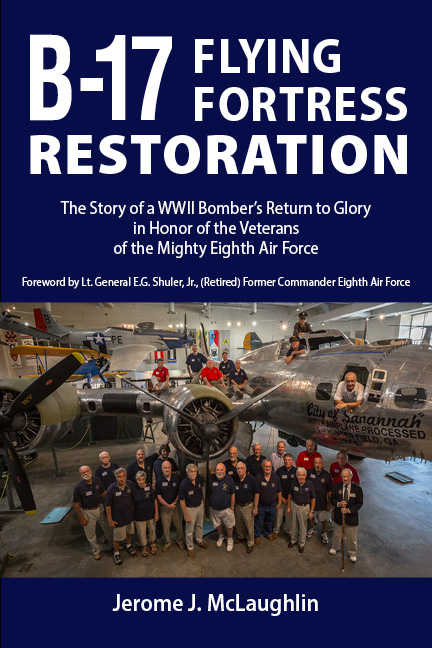
From 2009 to 2015 a dedicated band of warbird enthusiasts devoted themselves to restoring a WWII era B-17 Flying Fortress at the National Museum of the Mighty Eighth Air Force, located in Pooler, Georgia, just several miles from Savannah where the 8th Air Force was founded in 1942.
Manufactured in May of 1945, too late to take part in WWII, the B-17 (tail number 44-83814) spent the next 30 years serving peaceful purposes. Re-configured to take photographs for mapping development, 814 worked from the Canadian Arctic, across South America to the Antarctic, and then, leaving her cameras behind, became part of the forest fire slurry bombing fleet in the American west. Finally, 814 entered retirement in 1984 when she was traded to the Smithsonian Air and Space Museum for two P-2 aircraft. The Smithsonian placed 814 in a storage hangar in Chantilly, Virginia, where she spent the next 25 years – many of them tucked under a wing of the Space Shuttle Enterprise.
The B-17’s ultimate adventure began in January of 2009, when she was turned over to the National Museum of the Mighty Eighth Air Force for restoration as a monument in honor of the thousands of young Americans who served in the 8th Air Force during World War II.
In B-17 Flying Fortress Restoration the book’s author, and Project Manager for the restoration of 814, Jerry McLaughlin, recounts the challenging effort to restore the 70-year-old airplane. Guiding a group of volunteers, with professional support from the Savannah aviation community, McLaughlin and his team began their effort by honestly stating, “We don’t know what we don’t know”….about restoring airplanes. Six years later, at the airplane’s dedication, he told an audience of 600, “We believe we have created the finest operational static display B-17 in the world.”
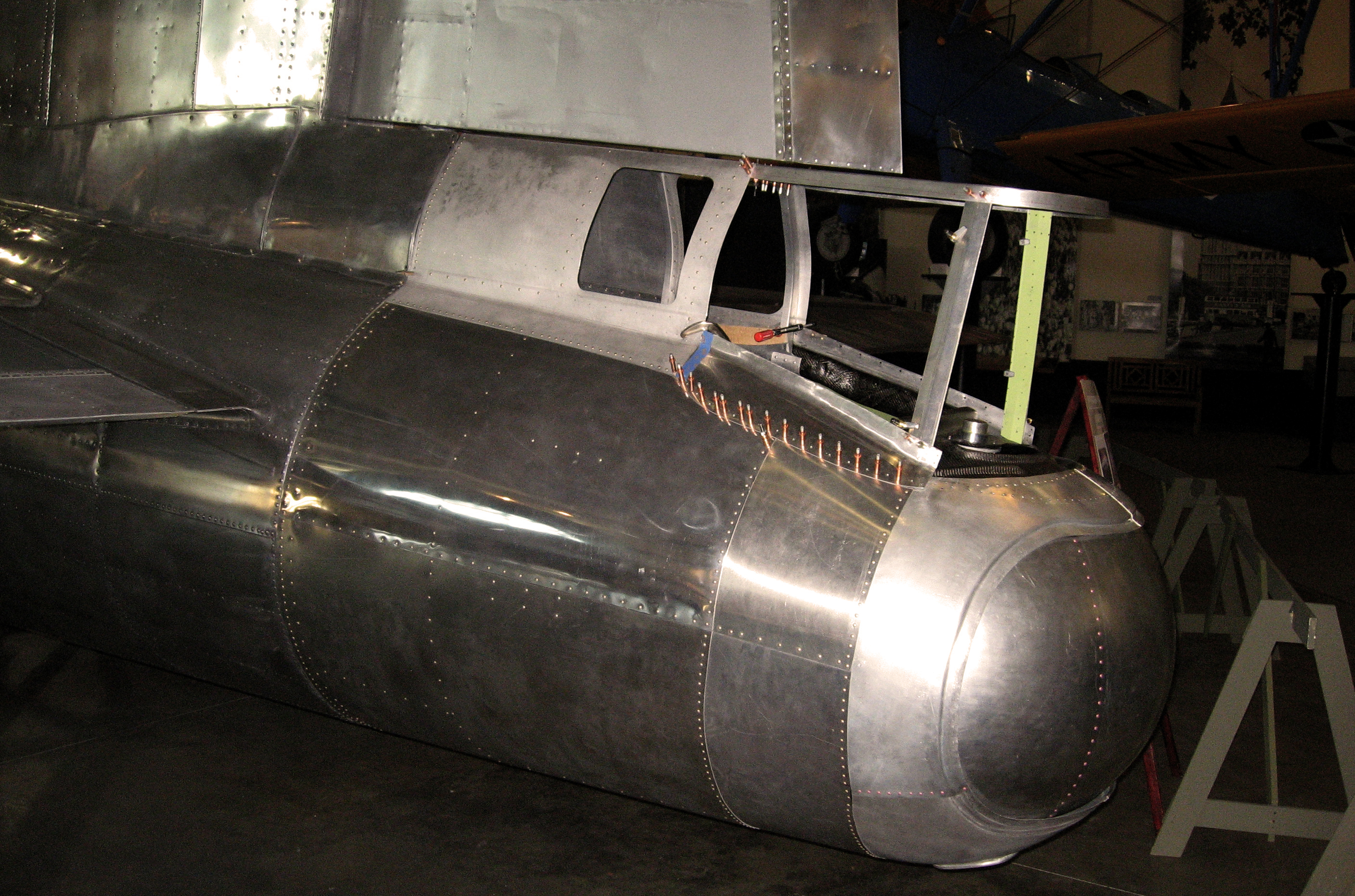
The book describes how the restoration efforts began with a full year of cleaning crud from both the exterior and interior of the airplane, which had now been named City of Savannah, after a B-17 that had previously departed for the war in Europe with that name in December of 1944. The continuing story then describes how the cleaning effort evolved into employing the services of many skilled volunteers to bring the airplane back to it’s original glory, to include a completely restored and operational radio compartment, sheet metal work from nose to tail, and finally, the implementation of state-of-the-art 3D printing technology to produce parts for the airplane that no longer exist on the open market.
McLaughlin had no aviation related experience when he was appointed to head the restoration, but he is an experienced project manager and he had the foresight to gather about him people with years of experience in the aviation field – engineers, airframe and power plant mechanics, and even a retired physics professor with 30 years of private pilot experience – all volunteers imbued with a fascination for vintage warbirds. It was no accident that the work crews on the project were led, for the most part, by individuals with extensive military aviation backgrounds as senior non-commissioned officers.
Finally, the book weaves together personal narratives of individual volunteers to describe the story of the six year effort by those volunteers to overcome the challenges they faced to fulfill their dream to create a lasting symbol to honor their fathers and grandfathers and everyone who served in the Mighty Eighth.